ROOTS Menstrual Care System
Regenerative, Organic, and Traditional Systems
for Menstrual Care and Gender Equity
"Back to Roots for Equality"
Redesigning menstrual care through indigenous wisdom, regenerative materials, and community-led systems.
Regenerative, Organic, and Traditional Systems
for Menstrual Care and Gender Equity
"Back to Roots for Equality"
Redesigning menstrual care through indigenous wisdom, regenerative materials, and community-led systems.
A 17-year-old Orang Rimba woman navigating menstruation in the Sumatran rainforest
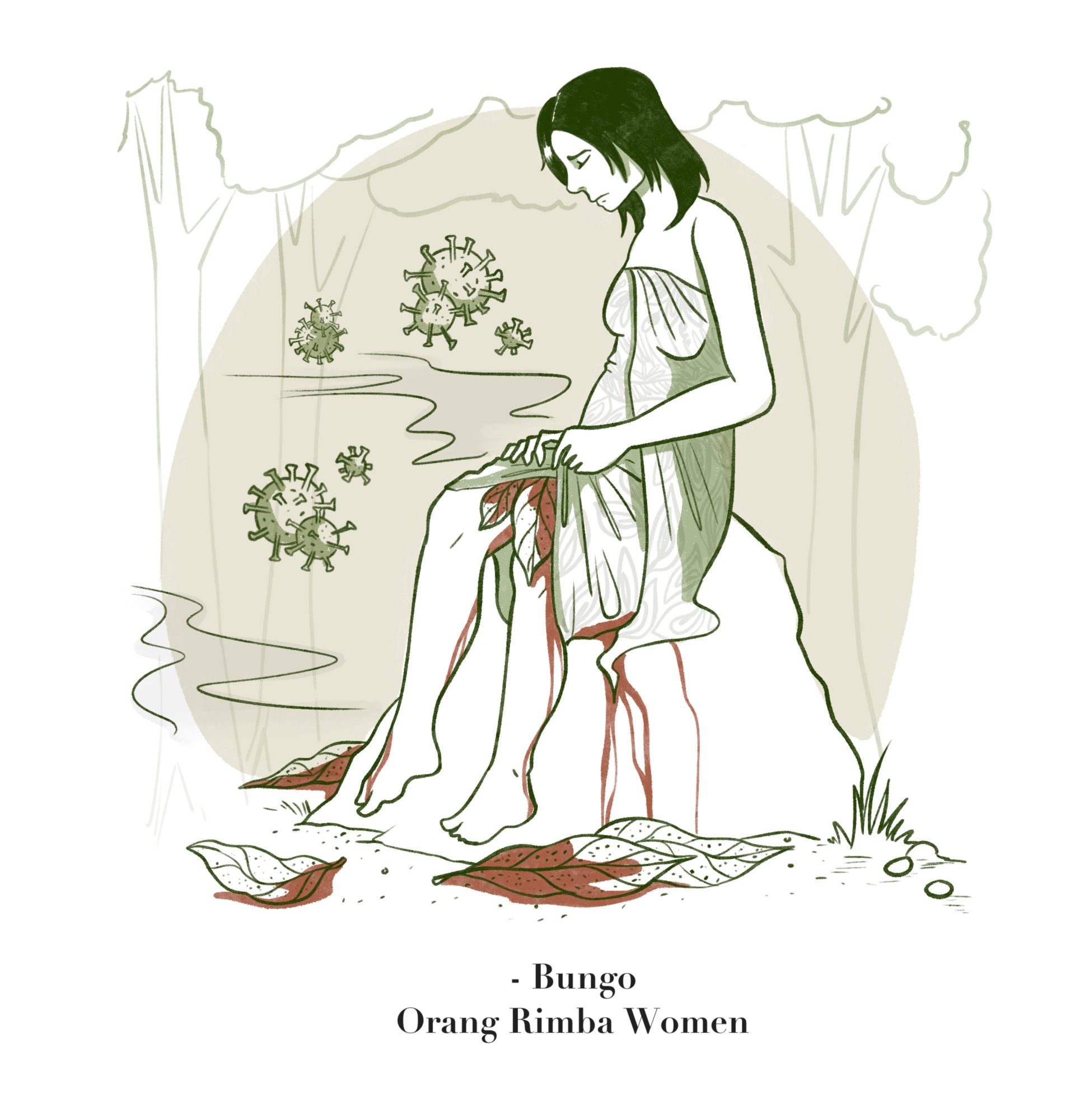
In Orang Rimba language, Bungo means "flower" — a symbol of resilience. Just like a flower blooming in harsh conditions, she represents indigenous women navigating menstruation with dignity.
"When my blood comes, I leave camp. Considered unclean, I sit alone for days with leaves. Infections come. Pain is constant. But I cannot speak of it. Menstruation is silent shame."
— Bungo, Orang Rimba Community
UNICEF & Kementerian PPPA (2023): Indigenous women face 3.5x higher menstrual complications. "Melangun" isolation persists in 78% of families.
An estimated 360 women in the community experience recurring reproductive tract infections annually due to inadequate menstrual materials.
High RiskMaternal mortality ratio: 1 in 65 births compared to national average of 1 in 420. Only 12 of 500 reproductive-age women have access to basic maternal care.
Gender GapWomen spend an average of 2,520 days (7 years) isolated during menstruation over their reproductive lifetime. Zero access to menstrual products.
Social ExclusionCross-generational taboo: 0 formal menstrual education programs exist. 485 of 500 women report never discussing menstruation with male family members.
Cultural Barrier0
Annual Infection Cases
1:0
Maternal Mortality Ratio
0
Days in Isolation (Lifetime)
0
Menstrual Products Available
UNICEF Indonesia, 2023
"Indigenous women in forest-dwelling communities face menstrual health challenges that are fundamentally different from urban and rural populations."
Journal of Global Health, 2022
"High humidity environments (85%+) accelerate bacterial decomposition, making conventional cloth materials unsuitable for menstrual use within 4-6 hours."
Kementerian PPPA, 2024
"Gender inequality in indigenous communities correlates directly with reproductive health outcomes, creating cycles of disadvantage across generations."
Current menstrual solutions are designed for urban, temperate environments, failing catastrophically in tropical rainforest conditions.
Core Problem
Orang Rimba Women Lack Access to Dignified Menstrual Care
⚠️ Inequality Highlight
Menstrual injustice in Orang Rimba communities is not merely a product distribution problem—it is a systemic design failure. Modern products are designed for urban settings and temperate climates, not tropical rainforests. Solutions must be redesigned from the ground up, understanding the forest ecosystem, indigenous practices, and subsistence economy of the Orang Rimba people.
Designed for urban use
Materials rot in humidity
85%+ humidity causes rapid degradation
No supply chain access
Zero distribution to forest areas
Requires cash purchase
Incompatible with subsistence economy
Needs infrastructure
8+ hour drying time
Impossible in rainforest conditions
Bacteria growth risk
No antimicrobial protection
Needs clean water & drying space
Fixed infrastructure required
Can existing menstrual products meet these requirements?
Survives 85%+ Humidity
FAILED
Dries in <2 Hours
FAILED
Available Locally
FAILED
No Cash Required
FAILED
Culturally Appropriate
FAILED
0/5 Requirements Met — A New Design is Needed
90%
Material Degradation
Within first week of use
8+
Hours Drying Time
vs. 2 hours needed
0%
Local Availability
No supply chain exists
No existing solution bridges this gap → A new design is required
Material Science
Products must resist 85%+ humidity and dry within 2 hours
Local Sourcing
Materials must be available from forest ecosystem
Cultural Integration
Solutions must align with indigenous beliefs and practices
Self-Sufficiency
Community must produce and distribute independently
WHO Technical Report, 2023
"Menstrual health interventions in remote indigenous communities require fundamentally different approaches than urban or rural programs."
Lancet Public Health, 2022
"Design failures in menstrual products account for 67% of reproductive tract infections in tropical forest-dwelling populations."
High humidity, limited drying capacity, no waste infrastructure
Accelerated bacterial growth, infection risk, hygiene challenges
Taboo silence, ritual impurity beliefs, intergenerational stigma
No roads, no supply chains, nomadic lifestyle, cash-scarce economy
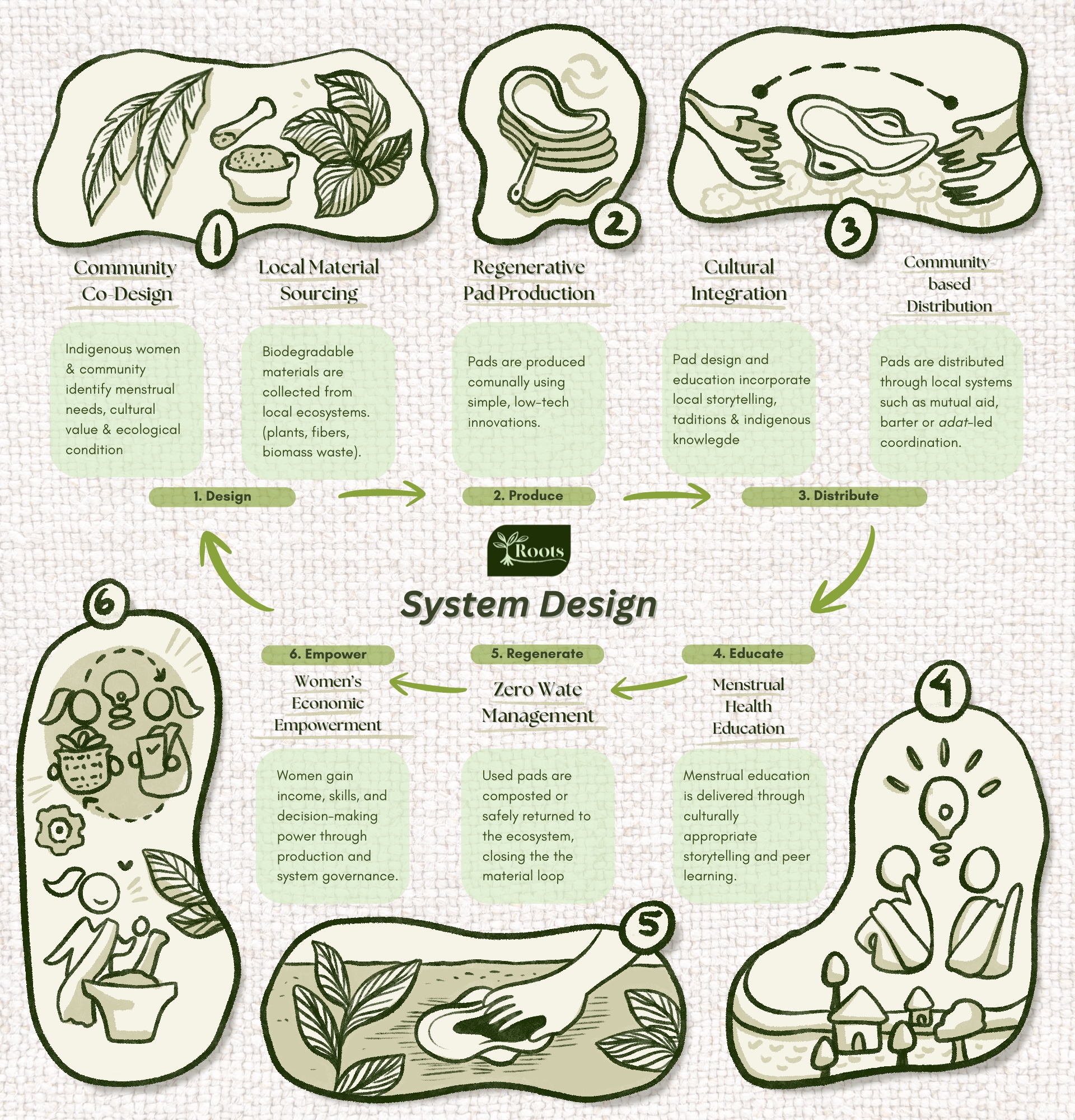
ROOTS emerges from the intersection of indigenous knowledge, regenerative design, and material science.
Kapok fiber, banana stems, ramie cloth, neem leaves: materials that grow, absorb, and return to earth.
Centuries of indigenous women's knowledge about menstrual care, herbal remedies, and body wisdom.
Menstrual care as interconnected social, ecological, economic, and cultural system, not isolated product.
Every element of ROOTS is interconnected. Change in one area ripples through the entire system, creating reinforcing cycles of positive impact.
🌺 Product
Forest-adapted materials designed for 85%+ humidity with natural antimicrobial properties
🤝 Community
Women-led cooperatives governed by traditional councils with fair profit sharing
❤️ Health
Reducing infections by 80% through hygienic products and proper education
🎭 Culture
Respecting indigenous worldviews while transforming harmful taboos through dialogue
🌱 Sustainability
Regenerative materials that biodegrade within 6 months, enhancing forest health
📚 Education
Storytelling-based programs engaging men and elders in menstrual health conversations
ROOTS is not a product. It is a system design framework where three interconnected pillars reinforce each other.
Where to Play & How to Win
Product Leadership
Create the most effective forest-adapted menstrual pad with superior absorption, antimicrobial properties, and quick-dry technology
Community First
Build 100% women-owned production cooperatives governed by traditional councils with fair profit sharing
Zero-Waste Cycle
Design full regenerative lifecycle from forest materials to compost, protecting the ecosystem
Key Strategic Initiatives
KAPAS HUTAN
Forest Cotton Initiative
• Develop forest-adapted menstrual pads using kapok & ramie fiber
• Natural antimicrobial treatment with neem extract
• Quick-dry technology for tropical humidity
• 6-month biodegradation cycle
KOPERASI RIMBA
Forest Cooperative
• Build women-led production & distribution cooperative
• Traditional council governance structure
• 60% profit allocation to women producers
• Cross-subsidy pricing model
CERITA MERAH
Red Stories Campaign
• Culturally-sensitive menstrual education program
• Storytelling for destigmatization
• Engage male traditional leaders
• Intergenerational knowledge transfer
Enablers & Capabilities
NGO Partnerships
Conservation & community development organizations
Research Support
Academic partners for product testing
Indigenous Knowledge
Traditional ecological wisdom
Forest Materials
Sustainable local sourcing
Community Trust
Long-term relationship building
Foundation & Core Values
Indigenous Wisdom
Respecting traditional knowledge
Gender Equity
Women-centered design
Environmental Stewardship
Zero waste, regenerative
Community Ownership
Collective prosperity
PRODUCT → ECONOMY
Local production creates jobs and income for women producers
ECONOMY → EDUCATION
Economic empowerment funds education programs
EDUCATION → PRODUCT
Destigmatization increases product adoption and usage
A regenerative business model where value flows circularly between stakeholders, creating sustainable impact.
40%
Product Sales
Cross-subsidy model
30%
Impact Grants
Foundation funding
20%
CSR Partnerships
Corporate partners
10%
Carbon Credits
Forest conservation
A four-layer menstrual pad system engineered for tropical humidity, using locally-sourced forest materials with antimicrobial properties.
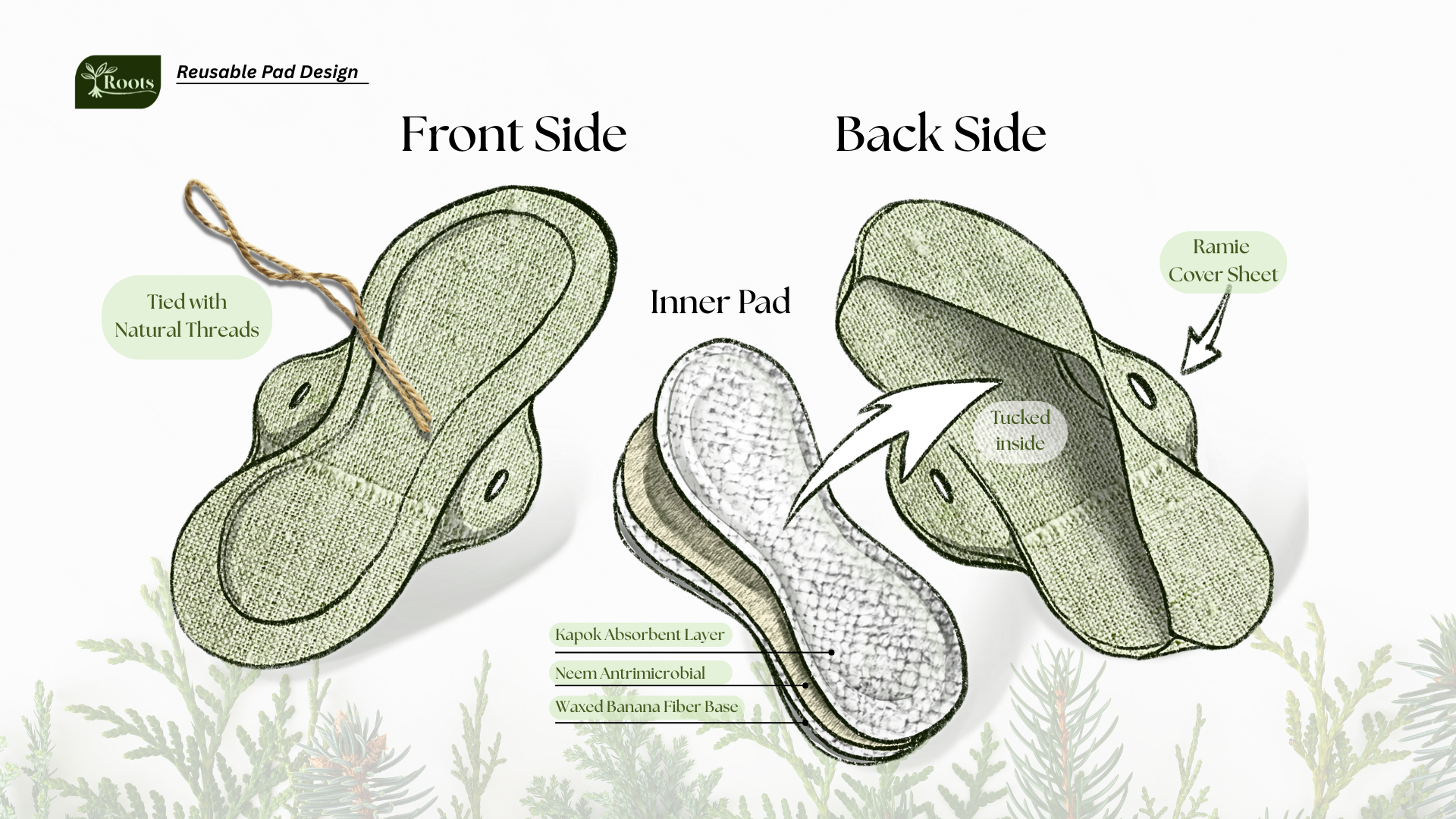
Sistem pembalut 4 lapis yang dirancang khusus untuk iklim tropis lembab, menggunakan bahan-bahan alami dari hutan dengan sifat antimikroba.
50ml
Absorbency Capacity
2hrs
Drying Time
6mo
Biodegradation
"From Forest Floor to Feminine Care"
Forest-adapted, regenerative menstrual pads using natural materials that biodegrade within 6 months.
Four-layer innovation using forest materials:
Community-based manufacturing:
Regenerative by design:
A self-sustaining economic model governed by customary councils, with women-led production and cross-subsidy distribution.
40%
Subsidy
Free/Low-cost
35%
Barter
Forest Products
25%
Premium
Urban Sales
Traditional governance oversight and community approval
Local women lead production, earning fair wages
Sustainable harvesting tied to conservation
70% to community, 30% reinvestment
"Community Ownership, Collective Prosperity"
Community-led production cooperative governed by customary councils with fair profit sharing.
Hybrid traditional-modern structure:
Cross-subsidy distribution model:
Resilient distribution network:
A storytelling-based education framework that transforms stigma through intergenerational knowledge transfer and male engagement.
Elders share traditional menstrual wisdom through oral storytelling
Trained young women guide peers through menarche and menstrual health
Fathers, brothers, and husbands learn to support, not stigmatize
Simple visual tools for cycle awareness and infection prevention
"Breaking Silence Through Stories"
Storytelling-based education for destigmatization, knowledge transfer, and community engagement.
Culturally appropriate education:
Building local capacity:
Transformative dialogue:
A hybrid social enterprise model balancing accessibility with sustainability.
KEY PARTNERS
KEY ACTIVITIES
VALUE PROPOSITIONS
CUSTOMER RELATIONSHIPS
CUSTOMER SEGMENTS
KEY RESOURCES
CHANNELS
COST STRUCTURE
REVENUE STREAMS
Conservative estimates based on pilot data and market research
€2,000
Equipment & Training (40%)
€1,250
Raw Inventory (25%)
€1,000
Market Entry (20%)
€750
Operational Buffer (15%)
Year 3
Break-Even Point
180%
5-Year ROI
€250K
Year 5 Revenue
| Metric | Year 1 | Year 2 | Year 3 | Year 4 | Year 5 |
|---|---|---|---|---|---|
| 📦 Products Produced | 12,000 | 36,000 | 72,000 | 120,000 | 180,000 |
| 💰 Total Revenue | €15,000 | €45,000 | €95,000 | €160,000 | €250,000 |
| - Product Sales | €4,200 | €18,000 | €52,000 | €96,000 | €150,000 |
| - Grants & CSR | €10,000 | €25,000 | €40,000 | €60,000 | €90,000 |
| - Barter Value | €800 | €2,000 | €3,000 | €4,000 | €10,000 |
| 📉 Total Expenses | €22,000 | €48,000 | €80,000 | €120,000 | €170,000 |
| - Materials & Production | €8,000 | €20,000 | €35,000 | €55,000 | €80,000 |
| - Labor (Women Producers) | €6,000 | €15,000 | €25,000 | €40,000 | €55,000 |
| - Education Programs | €5,000 | €8,000 | €12,000 | €15,000 | €20,000 |
| - Distribution & Ops | €3,000 | €5,000 | €8,000 | €10,000 | €15,000 |
| 📈 Net Profit / (Loss) | (€7,000) | (€3,000) | €15,000 | €40,000 | €80,000 |
| 👩 Women Employed | 5 | 12 | 25 | 40 | 60 |
| 🩸 Women Served (Cumulative) | 100 | 300 | 500 | 1,200 | 3,000 |
Materials available, production methods proven
Strong community engagement, cultural alignment
Regenerative by design, zero-waste lifecycle
Logistics challenging, requires local capacity building
Viable with initial grant funding and cross-subsidy model
Why standard solutions fail in the rainforest and why ROOTS is the only viable choice.
| Feature / Metric | Disposable Pads | Reusable Cloth | ROOTS System |
|---|---|---|---|
| Biodegradability |
Poor
> 500 Years
(Plastic Waste)
|
Average
Microplastics
(Shedding)
|
Excellent
100% in 6 Months
|
| Rainforest Suitability | ❌ Garbage Crisis | ⚠️ Slow Drying (Humid) | ✅ 2h Quick-Dry Tech |
| Cultural Acceptance | "Foreign" / Taboo | Neutral | Co-created (Deep Trust) |
| Economic Model | Recurring Cost $$$ | One-time Purchase | Circular Income Source |
| Health Impact | Chemical Risks | Infection Risk (Damp) | Antimicrobial Protection |
"ROOTS isn't just a product comparison; it's a paradigm shift from dependency to dignity."
Bukit Duabelas National Park, Jambi Province, Sumatra, Indonesia
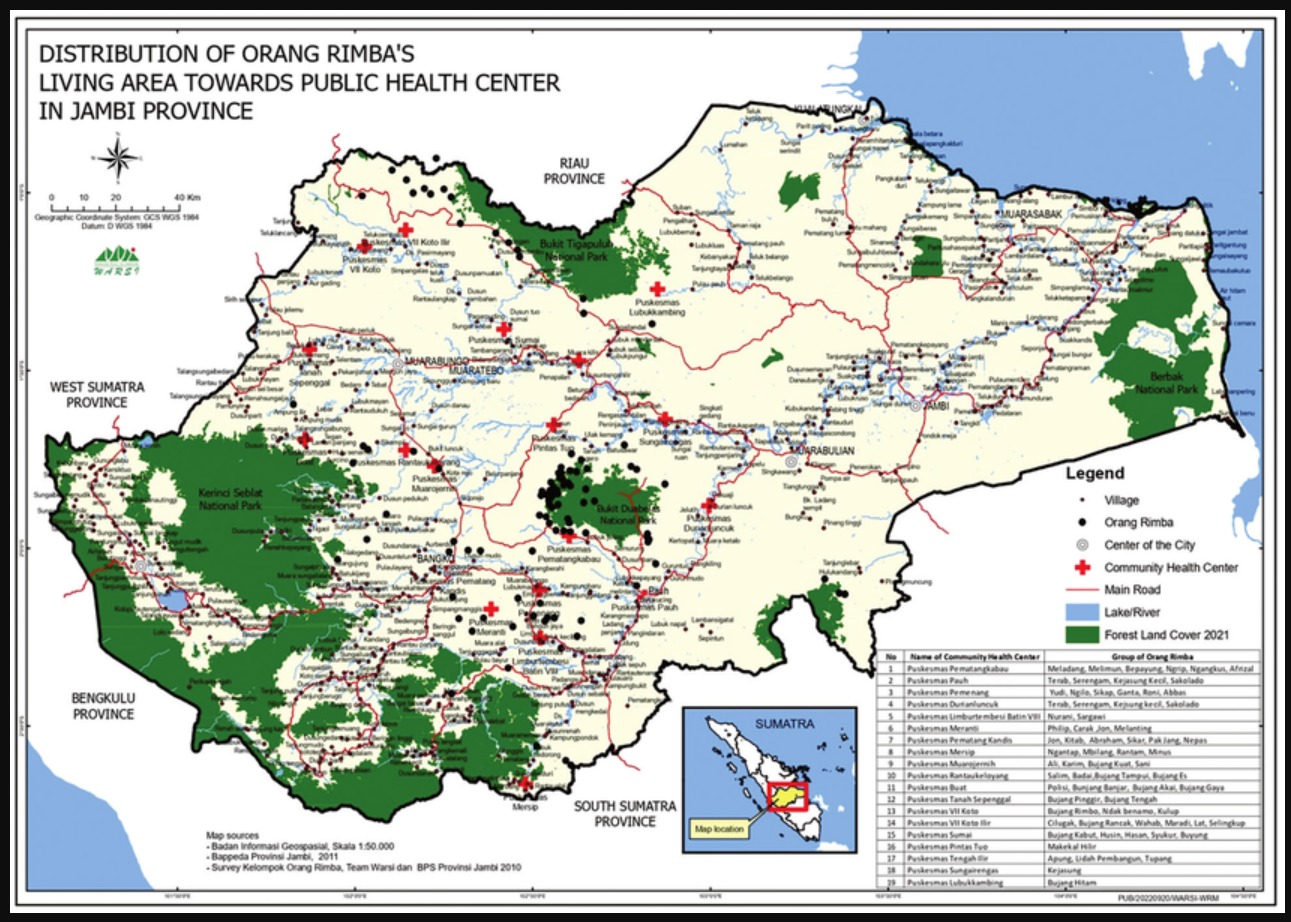
One of Indonesia's last remaining forest-dwelling indigenous groups, practicing semi-nomadic life in the Sumatran rainforest.
~3,500
Total Population
60,500
Hectares Protected
~500
Women of Reproductive Age
85%
Forest Dependency
Highest menstrual poverty rates in Indonesia with zero access to modern products
Centuries of traditional medicine and plant-based solutions already exist
KKI Warsi NGO has 20+ years presence with established trust relationships
Understanding key actors and their roles is critical for successful implementation. We analyze stakeholders through two complementary lenses: Ecosystem Layers (who supports whom) and Power-Interest Matrix (how to engage them strategically).
A holistic view showing how support radiates from the core beneficiaries outwards. Each layer plays a distinct role in enabling menstrual health transformation.
The heart of the mission: Orang Rimba women and girls who directly benefit from menstrual health solutions.
Gatekeepers of culture and trust who can accelerate or block adoption.
Resources, legality, and scale providers who enable long-term sustainability.
This matrix helps prioritize engagement strategies based on each stakeholder's influence and interest level. Different quadrants require different approaches to maximize impact.
🔵 KEEP SATISFIED
High power, low interest
🎯 MANAGE CLOSELY
High power, high interest
👁️ MONITOR
Low power, low interest
📢 KEEP INFORMED
Low power, high interest
⚖️
Regulators
💰
Local Merchants
👑
Tumenggung
🌍
Global Donors
👴
Village Heads
📢
General Public
🤝
Partner NGOs
👩🏽
Orang Rimba
📸
Eco-Tourists
Tumenggung, Village Heads, and Global Donors require regular communication, stakeholder meetings, and active involvement in decision-making to ensure project success.
Orang Rimba women, Partner NGOs, and Eco-Tourists should receive regular updates through newsletters, progress reports, and community meetings to maintain engagement.
A comprehensive assessment of potential risks across operational, environmental, social, and financial dimensions, with strategic mitigation approaches for each.
IMPACT →
High Priority
💰 Funding Gap
Mitigate
📦 Supply Chain
Critical
⚠️ Cultural Resistance
Top Priority
Medium
👥 Adoption
Monitor
🌡️ Climate
Mitigate
🔒 Knowledge Loss
High Priority
Low Priority
⚖️ Governance
Accept
📊 Scale
Monitor
High Priority
Accept
📱 Tech
Accept
Medium
Monitor
Low
Medium
High
Very High
PROBABILITY →
Click on each card to expand mitigation details
Risk: Community may reject external interventions on taboo subjects. Traditional isolation practices deeply embedded in culture.
Mitigation:
Risk: Seasonal availability of forest materials, dependence on natural resources, climate disruption affecting harvests.
Mitigation:
Risk: Initial investment requirements exceed social enterprise revenue, donor dependency risk in early phases.
Mitigation:
Risk: Extreme weather events, forest fires, ecosystem degradation affecting material availability and community mobility.
Mitigation:
Risk: Elders passing away before documenting medicinal plant knowledge, youth migration reducing knowledge transfer.
Mitigation:
Risk: Women may be hesitant to try new products, preference for traditional methods, peer pressure against adoption.
Mitigation:
Risk: Conflicting interests between customary law and government regulations, permit requirements, overlapping jurisdictions.
Mitigation:
Risk: Difficulty replicating success in other communities, local context variations, capacity constraints.
Mitigation:
5-Year Outcomes at Full Implementation
0
Women Reached
0
% Infection Reduction
0
kg Plastic Avoided
0
Women Employed
Primary impact area - directly addressing menstrual health disparities
Target 5.6: Reproductive Health
Universal access to menstrual hygiene for indigenous women
Target 5.1: End Discrimination
Eliminating menstrual stigma through CERITA MERAH
Target 5.5: Economic Participation
Women's ownership through KOPERASI RIMBA
Target 5.a: Economic Resources
60% profit allocation to women producers
Health
80% infection reduction
Decent Work
60 jobs created
Responsible
100% biodegradable
Life on Land
Forest conservation
Reduced
Indigenous inclusion
A multidisciplinary team dedicated to redesigning equality through innovation, empathy, and technology.

Project Lead
I would happily fight for gender equality and women empowerment in this patriarchal world, any chance I get

Community Lead
True health equity begins when we listen. I believe in empowering communities to build systems that honor their own wisdom and needs.

Product Designer
Design is about empathy. Creating products that care for both the user's dignity and the earth's future is my way of driving change.

Tech & GIS Analyst
Technology should bridge gaps, not widen them. Using data to map inequality helps us ensure our impact reaches those who need it most.
Back to Roots for Equality
Menstrual injustice is not a problem to be solved with better products. It is a system to be redesigned. ROOTS demonstrates that true design equality emerges when we honor indigenous wisdom, regenerate rather than extract, and center the voices of those most affected.
That's why ROOTS is redesigning equality for indigenous women in every forest, one menstrual cycle at a time.
"Design is not just what it looks like. Design is how it works — for everyone, everywhere."
Statement on Creative Integrity
Images presented in this project are not Generative AI. They are original designs or technical visualizations created to support the mission of equality, respecting artists' rights.